
Blog

Notities over werving, ATS-filters en een loopbaan die op papier klopt.

Illustration comparing a mass generic auto-application bot funnel with a high-precision targeted job application strategy for junior engineers.

Gepubliceerd

The 500-Application Illusion: Why Auto-Applying Destroys Junior Careers

With 22% of candidates—and 31% of Gen Z—now using AI agents to apply for jobs, application volumes have exploded while recruiter headcounts have dropped by 56%. But mass auto-applying creates a vicious cycle of noise and diminishing returns. Here is why automation should increase application relevance rather than volume, how modern ATS platforms filter application noise, and how to execute a high-precision, evidence-backed job search.

Lees verder →

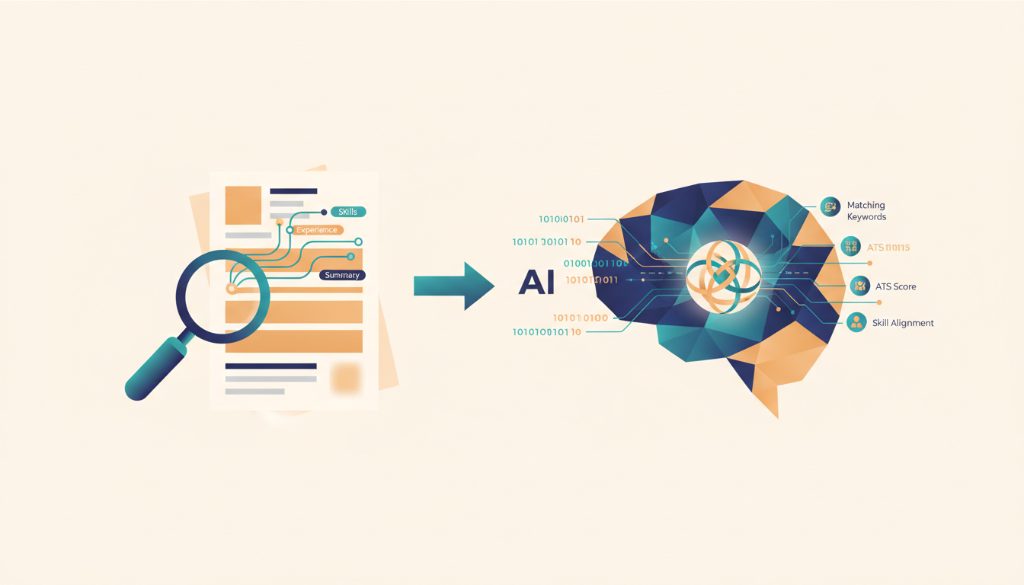
Diagram illustrating the transition from traditional junior code transcription to the modern AI-assisted Coached Operator role in software engineering

Gepubliceerd

The Junior Trap: Why Companies Stopped Training (And How "Coached Operators" Break In)

SignalFire's 2026 talent data reveals an acute divergence: entry-level hiring has plunged 65% at major tech companies and 76% at early-stage startups since 2019, even as overall engineering hiring held steady. The collapse is driven by a convergence of leaner teams, an abundance of experienced talent, and AI assistants absorbing the routine implementation work that once subsidized junior apprenticeships. Here is how emerging 'Coached Operators' prove engineering judgment before their first role.

Lees verder →
Diagram illustrating recruiter eye-tracking focus areas alongside structured ATS candidate indexing and parsing workflows

Gepubliceerd

Your First 90 Seconds: How Recruiters Actually Read Resumes (And What AI Sees)

Eye-tracking hardware shows recruiters spend an average of 7.4 seconds on an initial resume screen, focusing roughly 80% of their visual attention on just six data points. Meanwhile, Applicant Tracking Systems parse and index candidate records for recruiter search and filtering. Here is the data on how human eyes scan the page, why complex layouts increase parsing risk, and how to structure your career evidence so both machines and humans can understand it.

Lees verder →
Comparison between a generic AI application template and a structured, evidence-matched cover note

Gepubliceerd

The Cover Letter Is Dead. Long Live the Cover Letter.

Over 80% of hiring managers read cover letters when making interview decisions, yet high application volumes mean initial recruiter screens often skip long essays entirely. Meanwhile, 38% of job seekers using AI now generate cover letters, flooding inboxes with generic corporate filler. Here is why the traditional 400-word cover letter is dead, how to understand the two-stage hiring funnel, and how to write a high-signal note that actually gets read.

Lees verder →
A focused professional reviewing a career dashboard with highlighted job matches, surrounded by calm, organized workspace elements

Gepubliceerd

Why Applying to More Jobs Isn't Working

Application volumes have roughly tripled since 2021, yet candidates today are about 50% less likely to receive an interview than they were five years ago. More than half of job seekers report being ghosted by employers. The data is clear: sending more applications is not the answer. This article examines why the volume strategy fails, what Ashby’s analysis of 109 million applications reveals about the modern hiring funnel, and how to build a sustainable job search system that protects both your results and your wellbeing.

Lees verder →
A resume document being scanned and ranked by a digital system, with some results highlighted and others fading into the background

Gepubliceerd

Why Your Resume Disappears: The Truth About ATS in 2026

You've heard the statistic: 75% of resumes get rejected by ATS before a human ever sees them. It's been cited by Forbes, CNBC, and thousands of career coaches. There's just one problem — the number is completely made up. Here's what actually happens to your resume, why you're not hearing back, and what to do about it.

Lees verder →
Professional standing at a crossroads between traditional work tools and AI-powered instruments, symbolizing the career choice between AI augmentation and obsolescence

Gepubliceerd

AI Won't Take Your Job — But Someone Using AI Will. Here's Your Game Plan

63% of American workers admit to exaggerating their AI skills on resumes — yet the salary premium for verified AI competencies hit 62% in 2026. The job market isn't splitting into humans vs. machines. It's splitting into people who figured out how to work with AI and people who didn't. Here's the data behind the shift, and a three-step game plan to land on the right side of it.

Lees verder →